



Inclusive design through my lived experience
Inclusive design through my lived experience
Walking together: Inclusive design through my lived experience
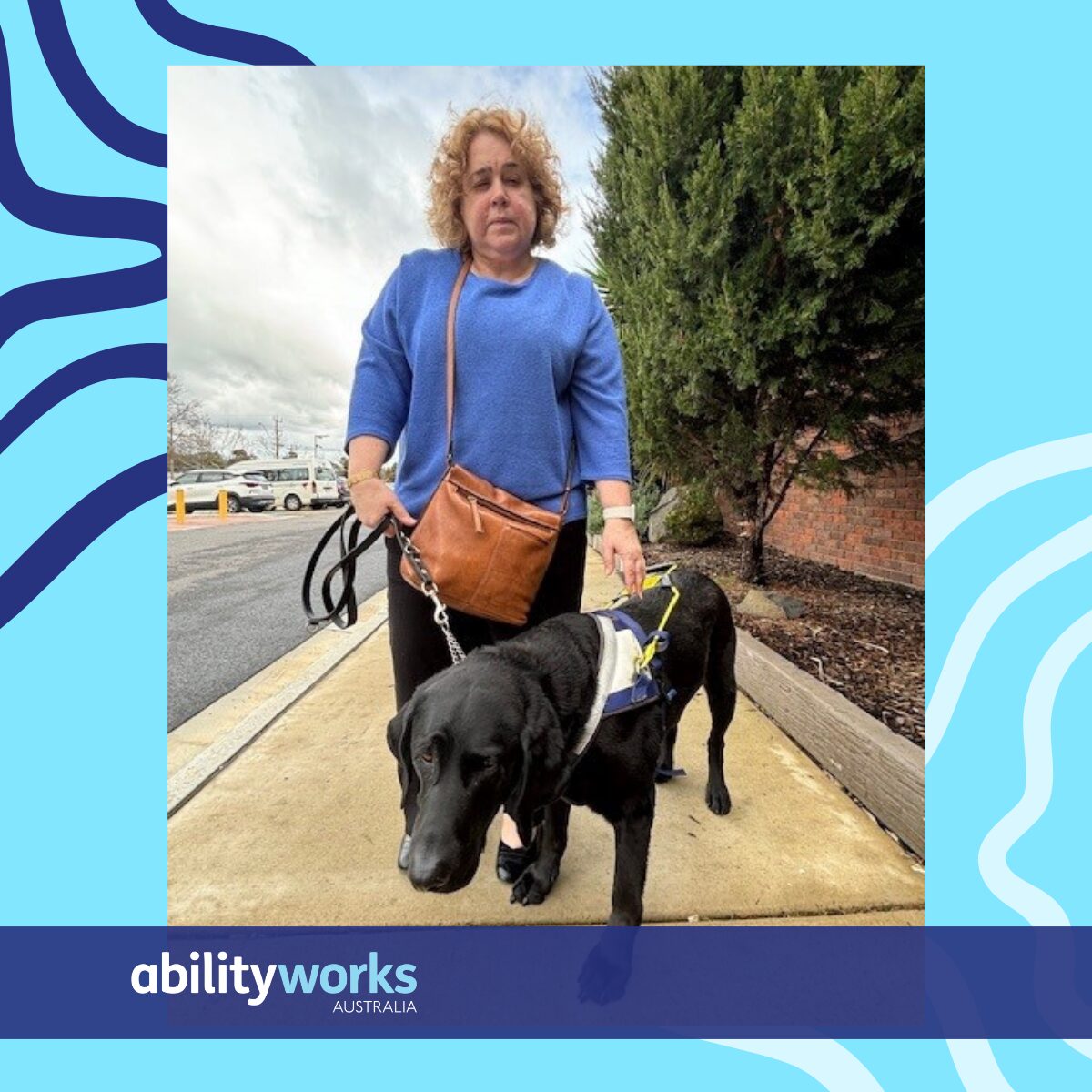
Inclusive design has been part of my life long before it became part of my work. I live with low vision – no useful sight in my right eye and blurred vision in my left – and I navigate the world with the support of my Seeing Eye Dog, Royce. I can read print up close, but I can’t recognise a person’s facial features unless they’re right beside me. That means the design of public spaces isn’t just interesting to me – it shapes my safety, independence and confidence every single day.
When I walk into a new environment, I’m not just thinking about myself. I’m thinking about the hundreds of people I’ve met through my work in disability, aged care, transport, and community services. I’m thinking about the people who don’t get invited into design rooms, and the people who don’t yet know they’re allowed to speak up.
Participating in inclusive design testing with Ability Works isn’t a hobby. It’s a responsibility.
What inclusive design looks like from my side of the harness
When I enter a testing session, I’m paying attention to things that many people don’t notice:
- Is the lighting creating glare that makes orientation harder?
- Are pathways wide enough for a guide-dog and their handler to move safely?
- Are buttons and handles placed where someone with low vision can reliably find them?
- Are there unexpected obstacles that could break Royce’s guiding line?
- Does the environment support independence – or require constant assistance?
These aren’t small details. They determine whether I can travel, work, socialise, and participate in my community with dignity.
Royce notices things too – sometimes before I do. When he hesitates, I know there’s a design issue. When he moves confidently, I know the environment is supporting both of us. People often forget that guide-dog users are a team. If a space isn’t designed for both members of that team, it isn’t accessible.
Why lived experience must lead design
My professional background spans social work, aged care, disability services, transport policy, community development, and accessibility advocacy. I’ve worked in hospitals, councils, national agencies, and community organisations. I’ve sat on advisory committees, reference groups, and working groups across Victoria and Australia.
But none of that replaces lived experience.
Lived experience tells you:
- where a design looks good on paper but fails in practice
- where independence is supported – or quietly taken away
- where a small change can transform someone’s confidence
- where a space feels welcoming, or where it feels like you don’t belong
Designers can’t guess these things. They need to hear them directly from the people who navigate these environments every day.
The power of being in the room
During testing sessions, I share what I know – not just from my own life, but from the stories and insights of the communities I’m part of. I speak about the realities of travelling with low vision, the importance of predictable layouts, the need for clear tactile and auditory cues, and the practical requirements of guide-dog teams.
I also speak about the emotional side of accessibility: the relief of feeling safe, the frustration of unnecessary barriers, and the dignity that comes from being able to move through the world without apology.
When designers listen – really listen – something shifts. You recognise it in their questions, their sketches, their prototypes; in the way they start thinking about people they’ve never met and needs they’ve never considered.
I recently completed an inclusive design review where there was a revolving door with an accessible glass door entrance at the side. The accessible entrance included:
- A bollard with a button that I couldn’t see to press and open the door.
- Signage on the bollard indicated there was a 5-second delay before the door opened, which I couldn’t see.
- The door didn’t beep or make a noise when it opened, and it operated on a timer that automatically closed after 30-seconds.
- I couldn’t see any visual markers on the glass doors.
An experience like this impacts my safety and dignity and denies people like me access to the building.
After I identified these were all issues for me, and others with low vision, with the designers, they recognised the usability could be improved to benefit anyone entering.
Why I keep showing up
I participate in this work because I believe in a future where accessibility isn’t an afterthought – it’s the starting point. A future where people with disability are not just consulted, but centred. A future where guide-dog teams can move through public spaces without navigating unnecessary risks. A future where independence is supported by design, not limited by it.
Royce and I walk into these sessions together. He brings his instincts, his training, and his unwavering focus. I bring my lived experience, my professional knowledge, and my commitment to making things better for the next person who comes through the door.
Inclusive design is not theoretical. It’s practical. It’s human. And it’s built through days like these – one environment, one conversation, one insight at a time.
About the author
Debra Simons completes inclusive design consultancy work with Ability Works and held a career as an allied health assistant and social worker in disability and aged care sectors. Presently, Debra holds numerous community engagement roles advising on accessibility. Her guide-dog, Royce, provides an important role with Debra’s access.