



A day in inclusive design testing
A day in inclusive design testing
Through my eyes: A day in inclusive design testing
I’m used to walking into new spaces with purpose. It’s part of my job – staying alert, noticing things others miss, and navigating paths and obstacles. Once I’ve got my uniform on, I know it’s time to get to work. My posture, my focus, the way I read the world. It’s like I take on a new identity.
So, hair brushed and uniform on, I was ready when we arrived at a recent Ability Works inclusive design testing session. New environment, new layout, new challenges. My favourite kind of day.
The room was full of people with different lived experiences – cane users, wheelchair users, people with low vision, people with sensory needs, people who move through the world in ways designers don’t always think about. They were here to test a public-facing environment and give feedback on what worked, what didn’t, and what needed to change.
I took it all in; the echo of the room, the placement of obstacles, the way people hesitated at certain points. Humans often think they’re subtle but trust me; I can tell when someone feels unsure.
Moving through the space
We began by walking through the environment as if it were an ordinary day. Could we get into the building, could we find the lift, the toilets? A few paused to talk about lighting, glare, or how the layout affected their sense of direction.
I stayed close, listening to every shift in tone and pace. I could feel when something was intuitive – and when something wasn’t. Narrow gaps, unexpected poles, unclear pathways… these things matter more than most people realise.
After the walk‑through, everyone gathered to share their insights. They spoke about safety, comfort, independence, and the small design choices that make a big difference. Their feedback was honest, practical, and grounded in lived experience.
Why I’m here
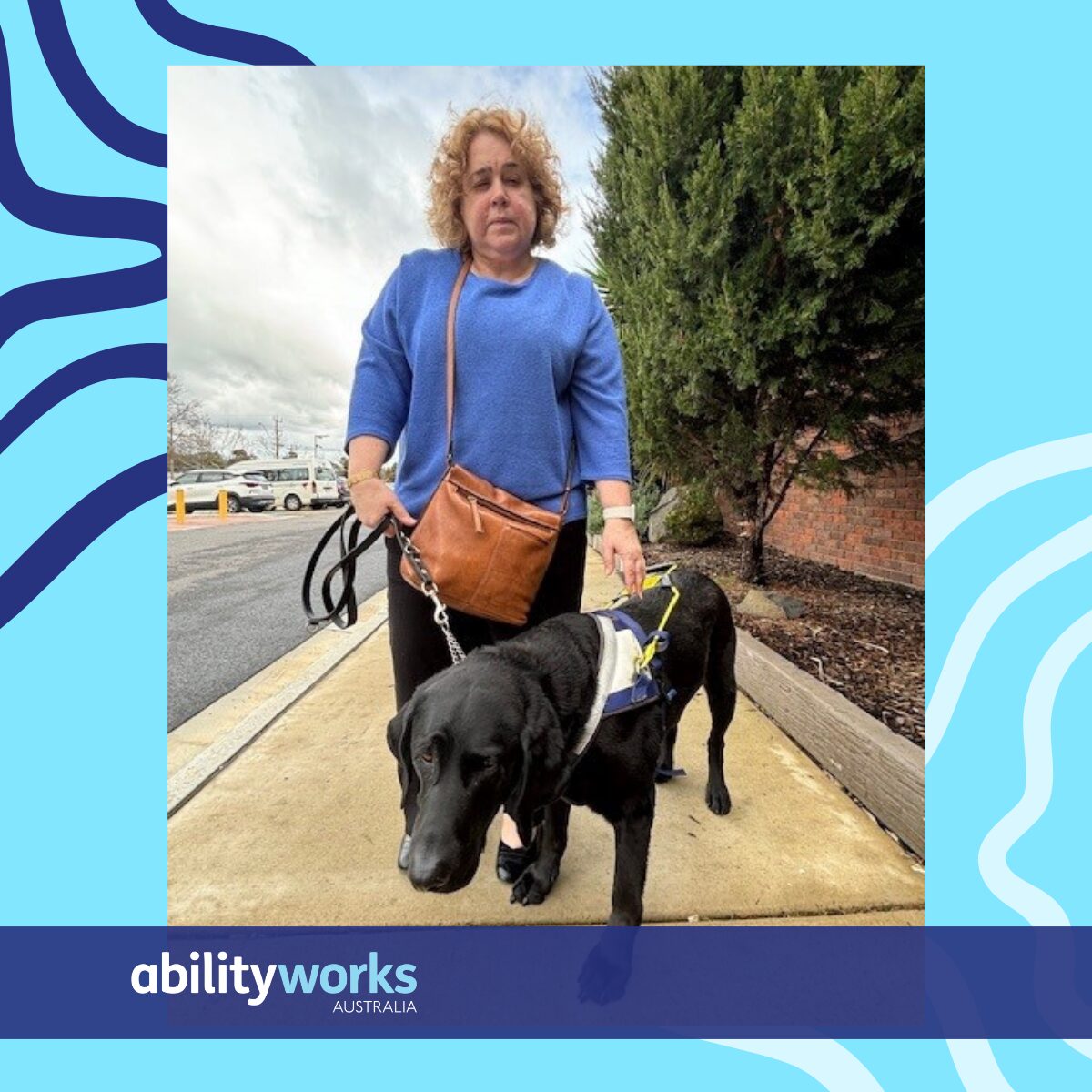
I’m at this session with Debra – who has spent her life working in disability, aged care, transport, and inclusive design. She’s a trainer, an advocate, a committee member, a social worker, and a fierce believer in accessibility. She knows how systems work – and how they sometimes fail the people who rely on them.
She participates in sessions like this because she knows that inclusive design only happens when people with lived experience are in the room.
And I’m always in the room with her.
Because I’m not just a quiet observer. I’m Royce – Debra’s Seeing Eye Dog.
And I have opinions.
A dog’s eye view of access
People often forget that guide-dog teams are two beings moving as one. When a space isn’t designed with us in mind, it affects both of us.
During the session, I paid attention to things humans rarely consider:
- whether there was enough space for me to sit or lie down safely
- whether pathways and doorways were wide enough for a dog and a handler to move side-by-side
- whether sudden obstacles would force me to break my guiding line
- whether the flooring helped me understand direction and boundaries
- whether the environment supported my handler’s independence – which supports mine
Designers often think about “the person with disability,” but they forget the working dog who is responsible for their safety. When space is tight, layouts are confusing and features are placed unpredictably it’s not just inconvenient. It’s unsafe.
When we’re forced to stand in the wheelchair space of a train, when I’m pushed into the walkway of a bus, when I have to uncomfortably curl up under an office desk. Waiting rooms, bathrooms, clothes-store change-rooms, the line at the post-office. I’m not just in the way of other’s – I’m at their mercy. I have to hope that people will respect the vest I wear and let me do my job. You would be surprised how often children are the least of our worry. People teach their kids to respect other peoples’ pets, to ask before petting, but it’s like adults forget their manners around me.
I’m here to do a job, and when narrow walk-ways push me into the path of an ignorant human, it causes trouble for me and my handler. We’re both inconvenienced and forced to stray from our intended task.
Advocacy from four paws and a harness
My handler speaks up in these testing sessions – for herself, for her community, and for people who may never get the chance to be in the room. She brings decades of professional experience and lived experience.
I advocate too, in my own way. Every time I hesitate at a narrow gap, every time I adjust my route to avoid a hazard, every time I stop because something doesn’t feel safe – that’s data. That’s lived experience. That’s design feedback.
At work, guide-dog teams need:
- Predictable, unobstructed pathways
- Enough space to navigate without breaking formation
- Clear cues in the environment, such as marking changing floor surfaces
- Seating and resting areas that don’t put us in the way of others
- A tethering point and space under the desk to be out of our co-worker’s way
- An accessible and discreet toileting point
- Environments that support independence, not dependence
When designers understand this, the world becomes safer for everyone – not just for people with low vision, but for parents with prams, older adults, people with mobility aids, and anyone who benefits from clarity and space.
Walking forward
My handler often says that inclusion isn’t theoretical – it’s practical. It’s built through real testing, real conversations, and real people sharing what they know.
I agree. I may not have her experiences and qualifications, but I know what it feels like to guide her through a world that wasn’t built with us in mind. And I know how powerful it is when designers listen.
This session showed what’s possible when lived experience leads the way – when people, dogs, and communities are invited to shape the environments they use every day.
As we left the session, I gave a small shake, lifted my head, and guided her forward – confident that the future is becoming more accessible, one thoughtful design decision at a time.
About the author
Royce is Debra Simons’ guide-dog and is a nine-year-old black labrador retriever cross. Royce is always by Debra’s side when he is working. When the harness is off and he is not working, he plays with his mate Marley (Debra’s pet dog).