

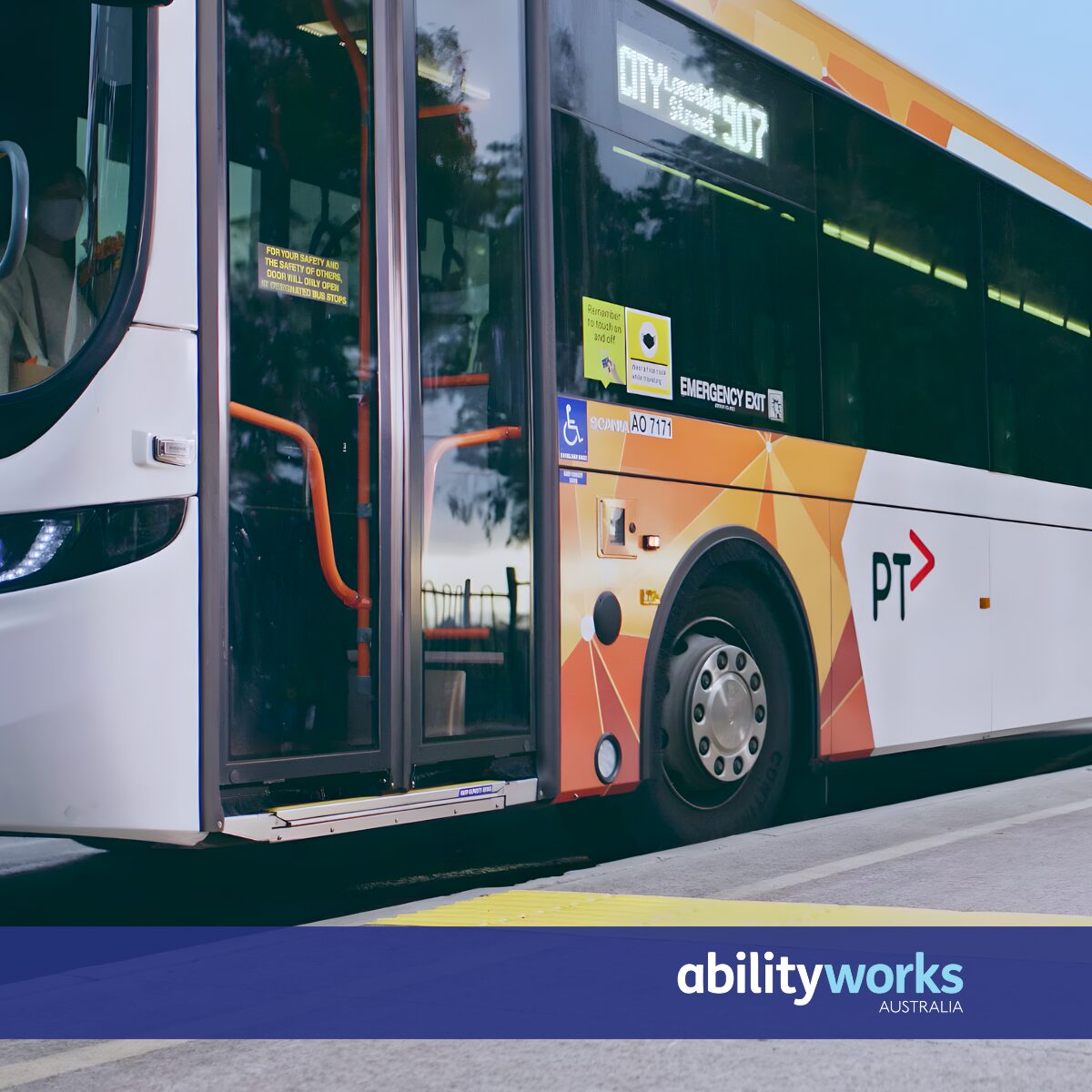


Building safer bus journeys with lived experience
Building safer bus journeys with lived experience
Every day across Melbourne, thousands of people rely on buses to get where they need to go – school, work, appointments, and community life. Bus Safety Week (16–22 March 2026) is a reminder that safe journeys depend on more than vehicles and timetables. They rely on the people who operate our transport network, the passengers who use it, and the systems that support accessibility for everyone.
At Ability Works, we see firsthand how accessibility, lived experience and respectful travel all contribute to safer, more inclusive public transport. Our Inclusive Design team works closely with transport operators across Australia to improve the experience of passengers with disability – on the road, online, and at every step of the journey.
The role of Accessibility Reference Groups in safer public transport
Accessibility Reference Groups (ARGs) bring together people with lived experience of disability to advise transport operators such as Metro Trains, Kinetic Buses, V/Line and Yarra Trams. Their insights help identify barriers, shape new projects and ensure accessibility is embedded from the start.
Dom Loulie, Inclusive Design Projects Coordinator at Ability Works, is a long-standing member of multiple ARGs across Victoria.
ARG members contribute by:
- Providing feedback on new infrastructure such as tram stops, bus interchanges and train stations
- Reviewing policies, accessibility programs and customer information
- Identifying barriers that affect people with disability when travelling
- Testing new systems including ticketing, wayfinding, apps and digital signage
- Advocating for stronger understanding and compliance with accessibility standards
“As someone with hearing loss, my experience helps improve the system for others who face similar challenges. I share my insights to make sure the public transport system is easier for everyone to use.” – Dom Loulie, Inclusive Design Projects Coordinator
ARGs play a critical role in safety. When passengers can navigate information clearly, understand announcements, and move through stations and interchanges with confidence, the whole network becomes safer and more predictable for everyone.
Improving digital accessibility for Kinetic Buses
Ability Works has previously partnered with Kinetic to improve the accessibility of their website – an essential tool for passengers planning safe and reliable journeys.
After joining Kinetic’s ARG, Dom identified an opportunity to strengthen the online experience for people with disability. Kinetic’s General Manager of Customer Experience, Justin Rogers, welcomed the chance to collaborate with Ability Works’ Inclusive Design team.
Our project team conducted a comprehensive accessibility audit against the Web Content Accessibility Guidelines (WCAG). This included automated testing, manual assessment, and usability testing with Ability Works employees with lived experience of disability. The usability testing helped us understand how real passengers navigate key areas of the site and where barriers might occur.
“The audit gave us a clear list of continued practical improvements to help us ensure our website remains accessible and a positive online experience with our service. It’s a great step forward in our ongoing efforts to make sure our digital experience works for everyone.
Dom, who’s part of our Accessibility Reference Group, was involved through Ability Works – and this really shows the value of having the ARG. It helps us connect directly with people who use our services and make real improvements based on their experiences.” – Justin Rogers, General Manager, Customer Experience, Kinetic
“… It was great working on this project. It brought together my work at Ability Works in Inclusive Design with my expertise and work on the Kinetic Accessibility Reference Group. I gained further skills and knowledge around digital accessibility as a result of working on this project…” – Dominique, Project Coordinator, Inclusive Design
Digital accessibility is a safety issue. When passengers can easily find route information, understand service changes and plan their journey, they are better equipped to travel confidently and safely.
Why Bus Safety Week matters
Safe Transport Victoria’s Bus Safety Week highlights the essential role bus drivers play in keeping the community moving – and the shared responsibility passengers have in creating a safe environment.
The campaign’s message is clear: respect makes the journey safer for all.
Passengers can support safer travel by:
- Pressing the stop button early so drivers can stop safely
- Staying calm during delays
- Showing patience during busy services
- Thanking their driver
These small actions reduce stress, prevent conflict and help drivers focus on what matters most: getting everyone to their destination safely.
The Bus Industry Confederation reports that physical assaults on bus drivers have increased by 80 per cent since 2022, and verbal abuse by 184 per cent. Many incidents stem from misunderstandings or situations outside the driver’s control – late stop requests, traffic delays, or confusion about routes.
Bus Safety Week aims to reduce these pressures by encouraging respectful behaviour and building understanding between drivers and passengers.
Accessibility and safety go hand in hand
When public transport is accessible, predictable and easy to navigate, it reduces stress for passengers and drivers alike. Clear information, inclusive design and lived experience insights all contribute to safer journeys.
Ability Works is proud to support transport operators across Victoria through:
- Accessibility Reference Group participation
- Inclusive design consulting
- Digital accessibility audits
- Usability testing with people with lived experience
- Co-design of safer, more accessible transport systems
Safer journeys are built through collaboration – between drivers, passengers, and the people working behind the scenes to make public transport more inclusive.
As Bus Safety Week reminds us, something as simple as respect, patience and accessible information can make all the difference.
“For me, a good bus trip is one where I feel safe, know what’s happening and can easily access everything I need to reach my destination. Educating drivers and the community makes every trip accessible for all.” – Dominique, Project Coordinator, Inclusive Design