

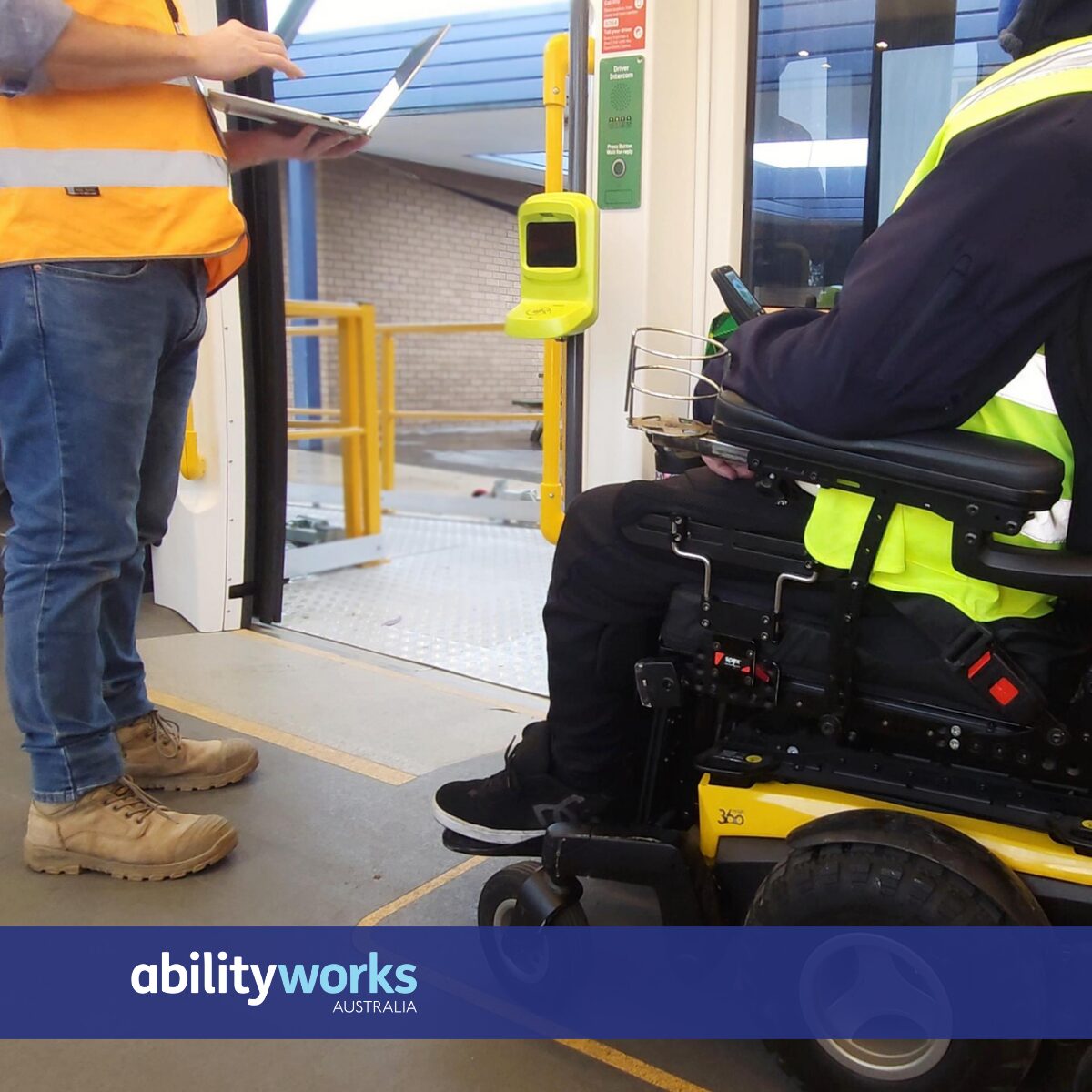


Inclusive Design in Public Transport Benefits Everyone
Inclusive Design in Public Transport Benefits Everyone
Accessible transport moves Melbourne
Every day, millions of Australians rely on public transport to get to work, attend education, access healthcare, connect with family and participate in community life. Public transport is more than infrastructure – it’s a gateway to opportunity.
Yet for many Australians, that gateway remains difficult to access.
According to the Australian Government, one in six Australians over 15 with disability have trouble using public transport. The Australian Institute of Health and Welfare also reports that only 62.9% of people with disability could use all forms of public transport without difficulty in 2022.
These figures highlight an important reality: accessibility challenges are not isolated incidents. When people cannot access public transport confidently and independently, the impacts extend well beyond individual journeys. Access to employment, education, healthcare and community participation can all be affected.
The question for transport providers, planners, engineers and designers is no longer whether accessibility matters.
It’s whether we can afford not to design for it from the beginning.
The hidden cost of getting accessibility wrong
Accessibility is often viewed through the lens of compliance, but the bigger issue is cost.
Inaccessible transport affects more than passenger experience. It can limit workforce participation, reduce public transport use and create barriers that affect economic and community participation.
When accessibility considerations are left until the end of a project, organisations frequently face expensive redesigns, remediation works and operational workarounds. What could have been addressed during planning becomes far more difficult to solve once infrastructure, systems or digital platforms are already in place.
Research from PwC and the Centre for Inclusive Design has found that retrofitting can cost up to 10,000 times more than incorporating inclusive design requirements during the initial design process. By comparison, implementing inclusive features from the outset typically adds less than one per cent to overall project costs.
Every issue identified before construction or deployment creates an opportunity for improvement. Issues discovered afterwards often become expensive remediation projects.
Whether it is a station precinct, bus interchange, ticketing system, transport website or passenger information display, inclusive design helps reduce risk, minimise rework and deliver better outcomes from day one. It also helps organisations protect project budgets, improve customer experiences and maximise the long-term value of public infrastructure investments.
Beyond compliance
Many accessibility issues are difficult to identify unless you experience them firsthand.
A station may comply with technical requirements yet still be confusing for someone with low vision. A journey planning website may pass automated testing but be unusable for somebody relying on a screen reader. A tram stop may technically be accessible but still create anxiety or confusion for a first-time user with a cognitive disability.
Standards play an important role, but they do not always tell the whole story.
Accessibility is ultimately about whether people can successfully complete a journey.
- Can they find the information they need?
- Can they understand it?
- Can they navigate independently and confidently?
- Can they reach their destination safely?
If the answer to any of these questions is no, then the user experience still contains barriers.
Accessibility across the whole journey
Modern accessibility extends far beyond ramps and lifts.
The Australian Government’s review of the Disability Standards for Accessible Public Transport identified the importance of creating accessible experiences across the entire journey, including information, communication, wayfinding, stops, stations, boarding and travel experiences.
For passengers, a journey begins long before they step onto a train, tram or bus.
It starts when they search for information online.
It continues when they plan a route, purchase a ticket, interpret signage, navigate interchanges and respond to service updates.
If any part of that journey creates a barrier, accessibility is compromised.
For transport providers, even small barriers can have a significant impact on how passengers experience and use the network.
This is why inclusive design must be considered across both physical and digital environments.
Why lived experience matters
One of the most effective ways to improve accessibility is to involve the people who experience barriers every day.
People with disability bring insights that cannot be captured by standards, checklists or technical specifications alone.
Their lived experience helps identify obstacles that project teams may never encounter themselves.
At Ability Works, lived experience sits at the center of our Inclusive Design approach.
Through Accessibility Reference Groups, user testing, accessibility assessments and co-design activities, people with disability contribute directly to the development of transport infrastructure, public spaces, digital experiences and customer services.
Their feedback helps organisations understand not only whether something complies with standards, but whether it actually works in practice.
Turning insight into better outcomes
Across Victoria, Ability Works team members contribute to Accessibility Reference Groups for transport operators including Metro Trains, V/Line, Yarra Trams and Kinetic.
These groups provide practical feedback on infrastructure projects, accessibility programs, customer information, wayfinding systems and emerging technologies before they are implemented.
By involving people with lived experience early, transport operators can identify potential barriers before they become costly problems. This enables project teams to make better-informed decisions, reduce the likelihood of expensive redesigns and deliver infrastructure and services that meet the needs of more passengers from day one.
The result is better project outcomes, reduced risk and more accessible transport experiences for the communities they serve.
Benefits beyond accessibility
Inclusive design is often associated with disability, but its benefits extend much further.
- Clearer information helps tourists and first-time users.
- Better wayfinding assists people who are unfamiliar with a location.
- Step-free access supports parents with prams, travellers with luggage and older Australians.
- Simpler digital experiences improve usability for everyone.
Designing for inclusion does not create special solutions for a few people. It creates better experiences for more people and helps transport networks serve a broader range of users over the long term.
Accessibility as a smart investment
Public transport networks are long-term investments. The decisions made during planning and design can influence passenger experiences for decades.
When accessibility is considered from the start, organisations can reduce rework, improve customer outcomes, strengthen community participation and create services that work for a broader range of people.
Accessible transport helps more people participate in employment, education and community life. But achieving that outcome requires more than compliance. It requires design that considers the whole journey and incorporates the perspectives of the people who use it.
By involving people with disability early, transport operators can identify barriers sooner, make better-informed decisions and create more inclusive experiences for everyone.
Because the best accessibility outcomes aren’t retrofitted – they’re designed from the start.