



Designing outdoor spaces for dignity and access
Designing outdoor spaces for dignity and access
Ability Works Australia collaborated with MRPA – an Alliance consisting of Level Crossing Removal Project, Fulton Hogan and MTM, also including designers SMEC, and BKK – to assess how inclusive and accessible the outdoor spaces are around the newly redeveloped Camms Road level crossing removal project in Cranbourne.
Our goal: to understand how people with lived experience of disability access and use the areas around train stations. And recommend practical improvements that make public infrastructure safer, more intuitive, and welcoming for all.
What we evaluated
Our team explored key features through the lens of lived experience:
- Accessible parking: Does it meet the needs of people with disabilities? Is it safe and easy to use?
- Shared paths: Are paths clearly marked and safe for mixed-use? How do they impact mobility?
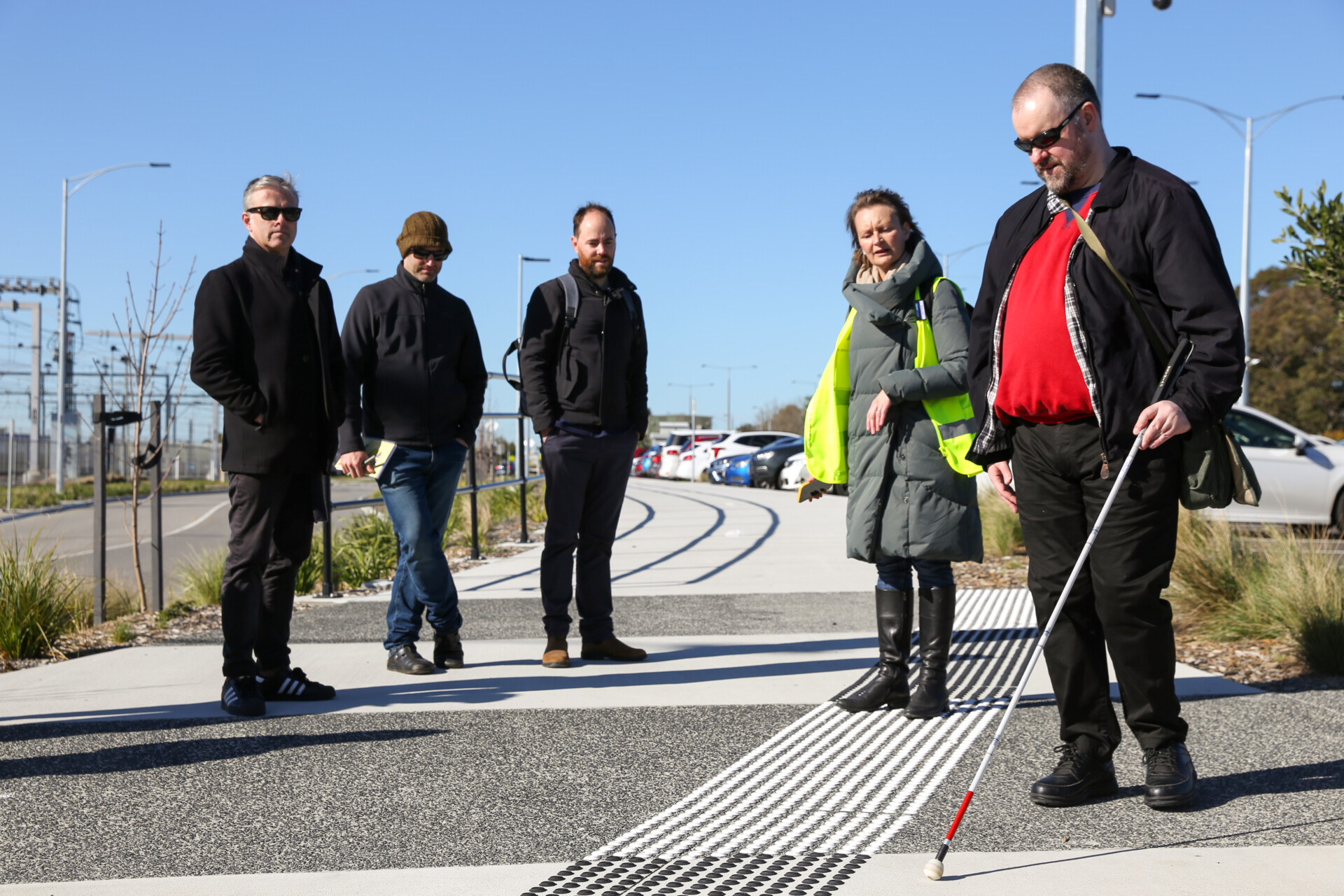
- Tactile ground surface indicators (TGSIs): Are they placed effectively to support people with vision impairments?
- Overpass and ramp access: Is the bridge and ramp easy to navigate independently?
- Plaza and open spaces: Can users rest, orient themselves, and feel safe? What enhancements could improve comfort?
- Handrails: Are they positioned for support and ease of movement?
- Acoustics and landscaping: Do sounds and garden features support wayfinding or create confusion?
How we worked
Together with MRPA, we developed testing scenarios and a discussion guide.
Ability Works recruited a team of 6 people with different lived experience of disability including, low vision, hearing loss, neurodivergence and physical accessibility.
We then conducted an on-site meeting with members of the MRPA team, allowing everyone to gain first-hand insights of real-world experience and challenges.
- Testers shared personal stories while navigating the space.
- Open conversations revealed what worked – and what didn’t.
- Our researchers captured notes, photos, and videos to inform a detailed insights report.
Why it matters
Designing for accessibility isn’t just about compliance – it’s about dignity and broad community application. Listening to lived experience reveals barriers that standards alone can’t capture. These insights help shift infrastructure from a tick-box exercise to a human-centred approach.
This work will inform future MRPA projects, including upcoming designs for the Maidstone Street level crossing removal project.
“Working with Ability Works and listening to people with a lived experience really changed our perspective about design, it gave our whole team a much deeper understanding of both the challenges and the opportunities for inclusive design.
Their honest feedback and personal stories inspired changes we simply wouldn’t have considered otherwise” – Christie Ariaratnam.
Want to know more?
Experience first-hand the design improvements and inclusive outcomes that can be obtained from inclusive design.
Contact the Inclusive Design team