



Our journey toward an accessible brand
Our journey toward an accessible brand
Join us, on the journey toward an accessible brand
We talk a lot about inclusion, accessibility, and designing with people in mind. To be credible partners in Inclusive Design, we need to model the same values we encourage in others. That means being transparent about our own learning, our own gaps, and the work we’ve done to strengthen accessibility within our own brand.
This is the story of how we discovered that our own brand wasn’t as accessible as we believed – and how we used that moment as an opportunity to practice what we teach.
Realising we had work to do
A little over two years ago, we began developing more of our marketing and communications materials in‑house. Until then, we had relied on external partners for branding guidelines and digital assets. As our Inclusive Design team reviewed these materials, something became clear: our brand wasn’t meeting the accessibility standards we expected of ourselves.
The issues weren’t dramatic. They were subtle. The kind of things you only notice when you place them side-by-side. But subtle issues still create barriers. And if we were going to support organisations to improve their accessibility, we needed to hold ourselves to the same standard.
We worked with our previous digital agency to help them understand what was and wasn’t accessible, this included:
- How to make text over image accessible
- Which colour combinations were appropriate
- How to write and implement alt text
Companies don’t know what they don’t know, and so it’s important to spread awareness and advocate for accessible practices wherever possible.
Small changes, big impact
The good news? We didn’t need a rebrand, in most cases, a simple refinement is all that’s needed.
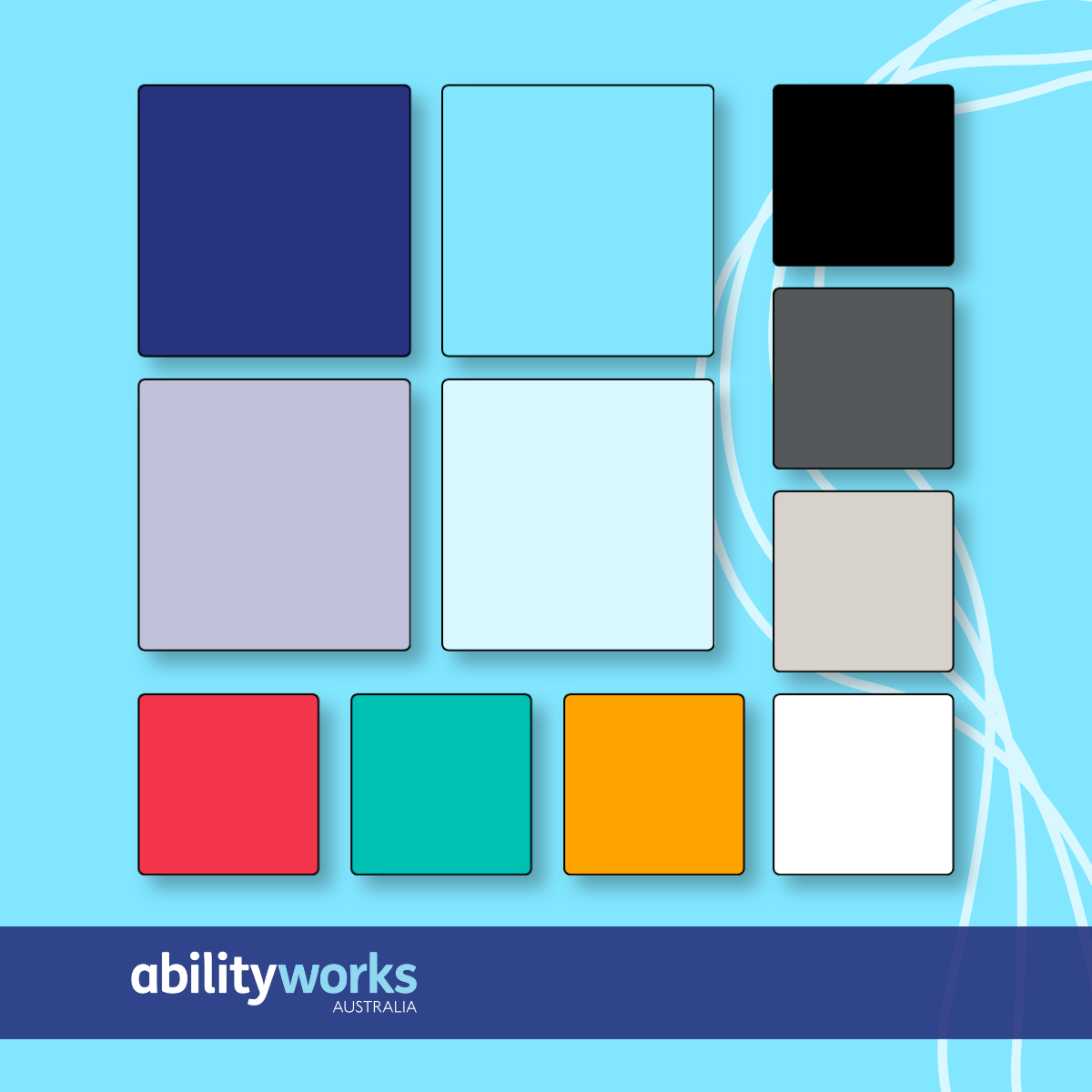
Through careful adjustments to our primary blues, we achieved colour contrast ratios above 7.5:1 – moving from occasional Web Content Accessibility Guidelines (WCAG) failures to consistent AA and AAA compliance.
Our font type, previously assumed to be accessible, failed some basic legibility tests. Characters like I, l, and 1 were indistinguishable. We replaced them with accessible Microsoft‑suite fonts that required no new installations and maintained the look and feel of our brand.
Our marketing and communications specialist uncovered outdated logos, missing templates, inconsistent file versions, and misaligned design choices. This sparked the creation of a comprehensive, easy‑to‑use style guide folder for the entire organisation.
With limited nonprofit resources, we redesigned icons, refined colour palettes, and rebuilt templates – all within the tools we already had.
These weren’t cosmetic changes. They were structural improvements that made our brand clearer, more consistent, and more inclusive for everyone who interacts with us.
Why accessible branding matters
When brands prioritise accessibility, they send a message: “We see you. You belong here.”
Accessible branding:
- Acknowledges diverse abilities and experiences
- Builds trust and connection
- Challenges exclusionary norms
- Empowers people with disabilities
- Transforms branding from a marketing tool into a force for social change
This is why we hold ourselves accountable. If we expect organisations to embed accessibility into their identity, we must do the same.
What we learned along the way
Our journey reinforced key principles we now share with partners:
- Design with empathy
- Engage people with lived experience. Ask what works, what doesn’t, and why.
- Audit what you already have
- Accessibility gaps often hide in the everyday tools you use – templates, colours, fonts, file structures.
- Choose universal design
- Offer multiple ways to access content: visual, auditory, text.
- Design, test, adjust, repeat
- Accessibility isn’t a one‑off project. It’s a practice.
- Educate your team
- Accessibility becomes sustainable when everyone understands its purpose and impact.
Start your own journey
We don’t claim to have everything perfect. We claim to be committed.
Our work with partners like Wide Bay Advocacy shows how accessibility can strengthen – not change – an organisation’s identity. And our internal journey shows that even organisations deeply invested in inclusion have room to grow.
By sharing our own process, we hope to make accessibility feel less intimidating and more achievable. If we can do it – with limited resources, existing tools, and a willingness to learn – others can too.
If you’d like to discuss how we can help improve your brand accessibility contact us.