



Men’s health and disability: Why inclusion shapes wellbeing
Men’s health and disability: Why inclusion shapes wellbeing
Author: Rae Bonney OAM, Manager of Mental Health, Wellbeing & Support.
The importance of being seen, heard and valued
Men’s Health Week often encourages us to think about health in terms of physical wellbeing, mental health and help seeking. While these conversations are important, my experience working alongside men with disability has taught me something else. Health is also deeply connected to very human needs: feeling valued, connected and able to make a meaningful contribution.
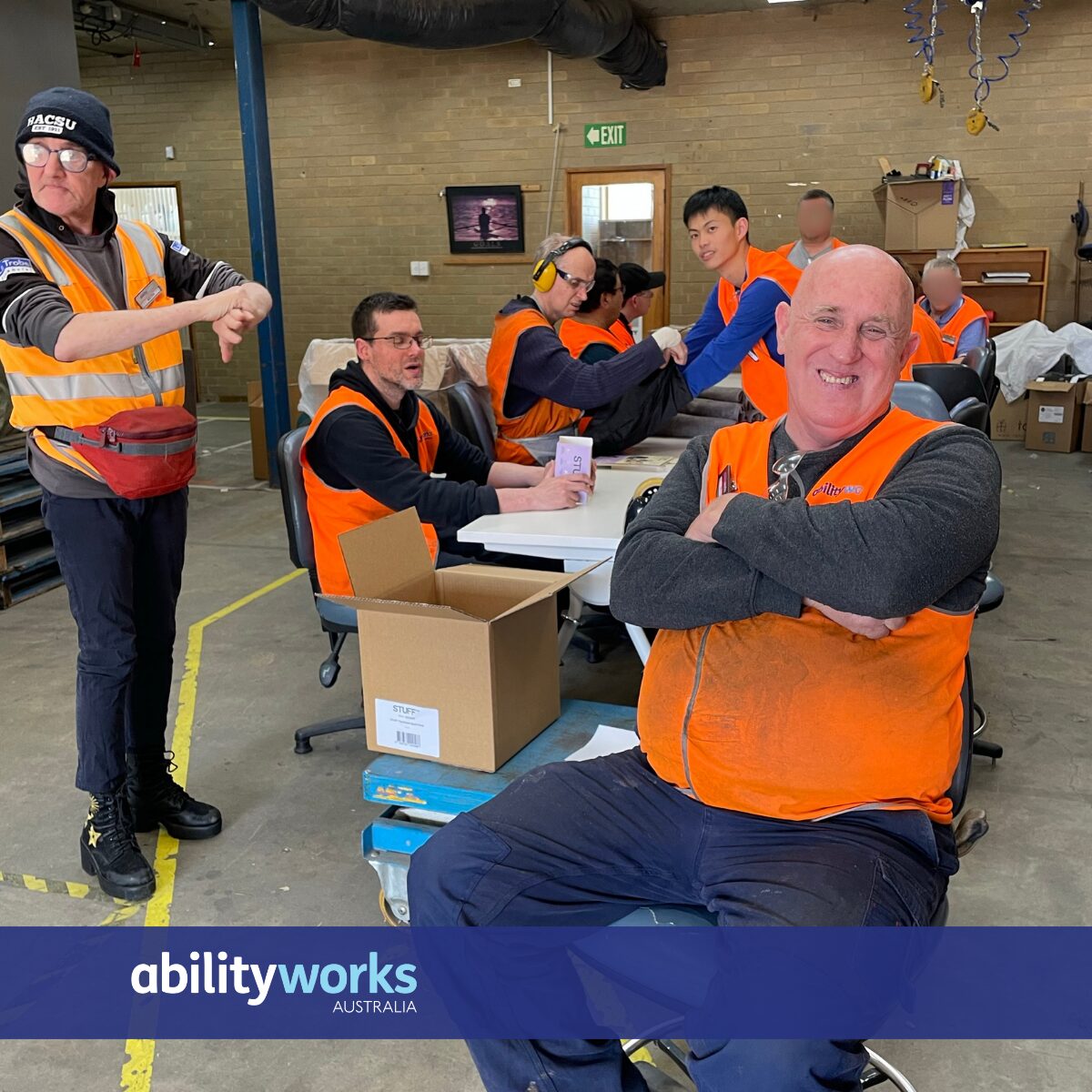
Over the past six years at Ability Works, I have had the privilege of working alongside many wonderful men with diverse abilities, experiences and life stories. What continues to stand out is not their challenges, but their strengths, resilience, humour, generosity and the many ways they enrich our workplace.
Like so many of us, men with disability often seek meaningful relationships, purpose, belonging, autonomy and valued roles within their communities and workplaces.
At the same time, some men with disability may experience additional pressures that affect their wellbeing. Social isolation, financial stress, stigma, inaccessible environments, relationship challenges and barriers to engagement can all influence health outcomes over time. This is why men’s health cannot be viewed solely through a healthcare lens.
An everyday observation from my work in men’s health is that people’s lives rarely unfold in neat, predictable patterns. Physical health, mental health, relationships, work, finances, housing, community and connection are all interconnected. When barriers restrict involvement in work, family, community or everyday life, the impact can extend well beyond functional challenges, affecting self-worth, relationships, belonging and overall wellbeing.
What continues to stand out at Ability Works is the extraordinary difference that genuinely inclusive environments can make. Through initiatives such as the Employee Representative Committee, people are provided with opportunities to have a voice, influence decisions, share their experiences and be recognised for their strengths.
Purpose, connection, meaningful relationships, financial security, physical health and opportunities to contribute all shape how men experience themselves and the world around them. When these foundations are under pressure, distress does not always look the way people expect it to. Sometimes it may appear as irritability, withdrawal, risk-taking, overworking, relationship conflict, disengagement, physical symptoms, substance use or simply becoming quieter than usual.
Part of the challenge is that we often focus on what we can see, without recognising what may be happening beneath the surface. Financial pressures, relationship breakdown, caring responsibilities, workplace demands, physical health conditions, social isolation, exposure to alcohol and gambling, and changing life circumstances can all influence how a person feels, behaves and copes.
When we understand behaviour as a form of communication rather than something to be judged, it allows us to become more curious about what may be happening beneath the surface. Rather than asking, “What’s wrong with this person?”, we can begin to ask, “What might this person be carrying?” or “What has happened that has brought them to this point?”
One of the most powerful things we can offer another person is genuine human connection.
A question I often ask is, “What does it feel like being you today?” It is simple, but it creates space for people to share their experiences in their own way and in their own time.
Importantly, there is no single experience of being a man living with disability. Every person’s story is unique and shaped by their life experiences, culture, relationships, strengths, aspirations and challenges.
What we can do is continue creating spaces, communities and systems that remove barriers to participation and recognise the strengths, capabilities and contributions people bring.
Perhaps that is one of the most important reflections from Men’s Health Week. Good health is influenced by far more than healthcare alone.
For men living with disability, these conditions can profoundly influence not only health and wellbeing, but quality of life, participation and a genuine sense of inclusion.